Radon Test Results
What Is a Safe Radon Level? pCi/L Explained
No level of radon is known to be completely risk free. Here is what 2.0, 4.0, and 10 pCi/L mean for your East Tennessee home, and when to act.
If you just got a radon test back and you are staring at a number wondering whether to worry, you are not alone. "Safe," "high," and "action level" get used loosely, and the difference between 1.9 pCi/L and 4.1 pCi/L can feel arbitrary if nobody explains what the units mean.
This guide answers the three questions we hear most: what is a safe radon level, what does 4.0 pCi/L mean, and is 2 pCi/L bad. It is written for East Tennessee homeowners, where about 1 in 3 homes tests above the EPA action level.
What is a safe radon level?
No level of radon is known to be completely risk free. The EPA sets 4.0 pCi/L as its action level, the point where it recommends mitigation. The EPA and the Tennessee Radon Program both recommend considering mitigation starting at 2.0 pCi/L, and the EPA's long term goal is to bring every home as close to outdoor levels as is reasonably achievable.
Radon is the second leading cause of lung cancer in the United States after smoking, and the EPA estimates it contributes to about 21,000 lung cancer deaths a year. "Safe" is better understood as a spectrum than a line. These are the numbers worth knowing:
- 0.4 pCi/L: typical outdoor air
- 1.3 pCi/L: the average American home
- 2.0 to 3.9 pCi/L: the EPA and the Tennessee Radon Program recommend considering mitigation
- 4.0 pCi/L: the EPA action level, where mitigation is recommended
What does pCi/L mean?
pCi/L stands for picocuries per liter of air. A picocurie is a trillionth of a curie, a measure of radioactivity, and "per liter" tells you how concentrated the radon is in the air you breathe. Your result is the average radon concentration in your home's air over the test period.
What does 4.0 pCi/L mean, and why is it the action level?
4.0 pCi/L is the EPA's action level, the concentration at which the agency recommends installing a mitigation system. It is a practical threshold, not a biological one: it is where the cost of a mitigation system is clearly justified by the reduction in lung cancer risk. Risk rises with both concentration and time, so a result just under 4.0 is not a green light.
Is 2 pCi/L bad? Is 4 pCi/L bad? What about 10?
Here is how the ranges generally break down for a single family home:
- Below 2.0 pCi/L: close to typical indoor levels. Retest every two to five years, or after major renovation or foundation work.
- 2.0 to 3.9 pCi/L: at least five times outdoor levels. The EPA and the Tennessee Radon Program recommend considering mitigation, and many homeowners choose to fix it, especially before a sale.
- 4.0 to 8.0 pCi/L: at or above the action level. Mitigation is recommended, and a single properly sized system typically resolves it.
- Above 8.0 pCi/L: well above the action level. Mitigation is recommended, and diagnostic testing determines the fan size and whether more than one suction point is needed.
A result below 2.0 pCi/L is good news, but it reflects one test period. Keep your result on file and retest on schedule, because radon levels shift with the seasons and after changes to the home.
Mitigation works. One customer's home dropped from roughly 10 pCi/L to 1.6, and another from 7 pCi/L to 0.5, both with systems built to the ANSI/AARST SGM-SF-2023 standard.
Why do East Tennessee homes test high?
Knoxville, Oak Ridge, and the surrounding counties sit on shale-rich, uranium-bearing ground. About 1 in 3 homes in our region tests above the EPA action level, so a high number here is common and fixable. Testing is the only way to know, because radon has no color, smell, or taste.
How does radon get into a home?
Radon is a gas that forms when uranium in soil and rock breaks down. It moves up through the ground and enters your home through cracks in the foundation, gaps around pipes, sump pits, and crawlspaces. Warm air rising and escaping from the upper part of your house, known as the stack effect, pulls more soil gas in at the bottom. That is why radon can affect slab, crawlspace, basement, and split level homes alike, and why newer homes can test high too.
How accurate is a single radon test?
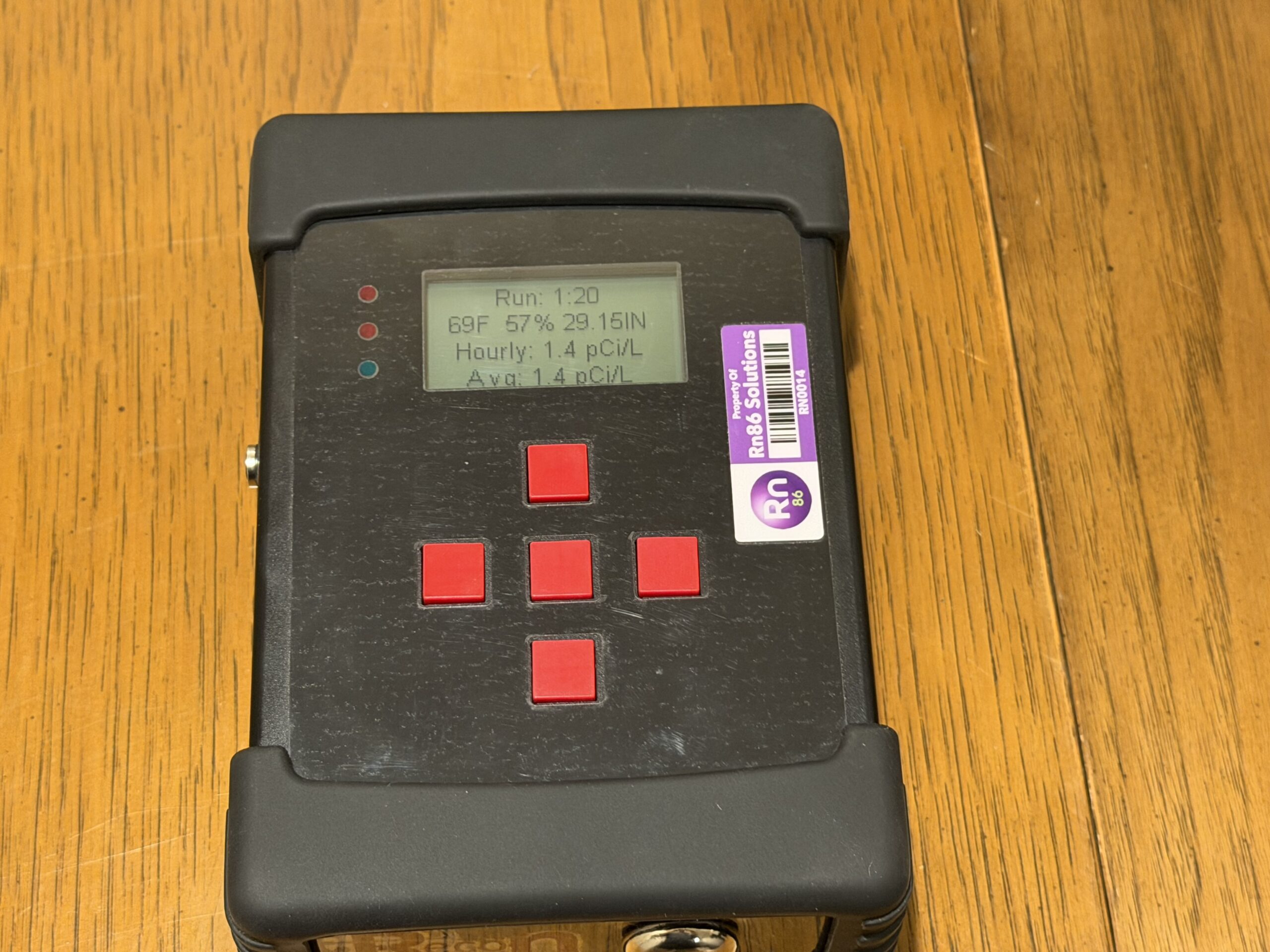
A single short-term test is a snapshot. Radon levels move with weather, barometric pressure, and how tightly a home is sealed that week, so 3.8 pCi/L today does not rule out 4.3 pCi/L next month. A professional test with an NRPP-approved continuous radon monitor logs hourly data and flags tampering, which a charcoal canister cannot do. If your result lands close to 4.0 in either direction, a longer or repeat test gives a more reliable picture.
When should you test, and how often should you retest?
Test any home you live in or plan to buy, no matter its age. Tennessee does not legally require radon testing, but it is commonly requested during real estate transactions, and our guide to radon and home sales in East Tennessee explains how that plays out for buyers, sellers, and agents.
After your first test, retest every two to five years, and again after any major renovation, foundation work, or HVAC change, since those can shift how air and soil gas move through the house. Our Radon Testing Guide explains how a professional test works.
What should you do if your radon test comes back high?
A result at or above 4.0 pCi/L is not an emergency, but it is not something to sit on.
- Confirm the result if it is borderline, with a longer or repeat test.
- Have diagnostic testing done. Pressure field extension (PFE) testing designs the system for your slab or crawlspace.
- Hire a certified professional to install an active soil depressurization system. Our 48-hour action plan walks through the timeline, and our mitigation cost guide explains what to expect.
- Verify the result. Test again within 30 days using an NRPP-approved device.
If your home is on a private well, test the water too. See our radon in water testing page. For more, read our Radon Testing Guide and 7 Questions to Ask a Radon Mitigation Company.
Not sure what your result means for your home?
Our NRPP-certified team will walk you through it and, if you need mitigation, get it done right.
Frequently Asked Questions
What does 4.0 pCi/L mean?
It is the EPA's action level, the concentration of radon in indoor air at which the agency recommends installing a mitigation system. It is a practical threshold, not a point where risk suddenly begins.
Is 2 pCi/L bad?
It is below the EPA's action level, but it is still about five times outdoor background levels. The EPA and the Tennessee Radon Program recommend considering mitigation starting at 2.0 pCi/L, and many homeowners choose to, especially before selling.
Is 4 pCi/L bad?
At or above 4.0 pCi/L, the EPA recommends mitigation. A properly designed active soil depressurization system typically brings levels well below that.
What is considered a safe radon level?
No level of radon is known to be completely risk free. The EPA's long term goal is to get indoor air as close as reasonably achievable to outdoor levels, about 0.4 pCi/L.
How often should I retest after mitigation?
Test within 30 days of installation using an NRPP-approved device, then every two to five years, or sooner after major renovation, foundation work, or HVAC changes.