NRPP-Certified Mitigation Specialists
Advanced Residential Radon Mitigation in East Tennessee
If your home has tested at or above the EPA Action Level of 4.0 pCi/L, it is time to take action. At Rn86 Solutions, we specialize in Residential Radon Mitigation systems that meet the rigorous new ANSI/AARST SGM-SF-2023 standards. Protect your family with the most effective radioactive gas reduction technology available.
How Residential Radon Mitigation Works
 Radon enters your home due to a pressure imbalance. Because the air inside your home is typically warmer and less dense than the soil gas beneath it, your house acts like a vacuum, pulling radon through cracks and pores in the foundation. This physical phenomenon is exacerbated by the "stack effect," where rising warm air creates a suction force at the base of the building, especially during the colder Tennessee winters when heating systems are running.
The gold standard for Residential Radon Mitigation is Active Soil Depressurization (ASD). Instead of fighting the radon once it is already inside your living space, an ASD system intercepts the gas before it ever enters. By using a specialized high-suction fan and a series of PVC vent pipes, we create a permanent "negative pressure zone" directly beneath your slab or crawlspace. This pulls the radon out of the soil and vents it safely above your roofline, where it is harmlessly diluted by the atmosphere.
The ASD Advantage:
- Immediate Results: Radon levels typically drop by 90-99% within 24 hours of system activation.
- Moisture Control: As a secondary benefit, ASD systems reduce dampness and humidity in basements and crawlspaces by removing water vapor from the soil.
- Energy Efficiency: Modern radon fans are designed for 24/7 operation with minimal electricity usage, often costing less than $100 per year to run.
Adherence to ANSI/AARST SGM-SF-2023
Effective December 1, 2023, the ANSI/AARST SGM-SF-2023 standard (Soil Gas Mitigation Standards for Existing Homes) became the definitive protocol for the industry. This update ensures that systems are built to last the lifetime of the home and are compatible with other indoor air quality measures. In East Tennessee, where various foundation types—from deep basements to tight crawlspaces—are common, following a standardized protocol is vital for system success.
When you choose Rn86 Solutions for your Residential Radon Mitigation, we strictly adhere to these updated requirements, including:
Diagnostic PFE Testing
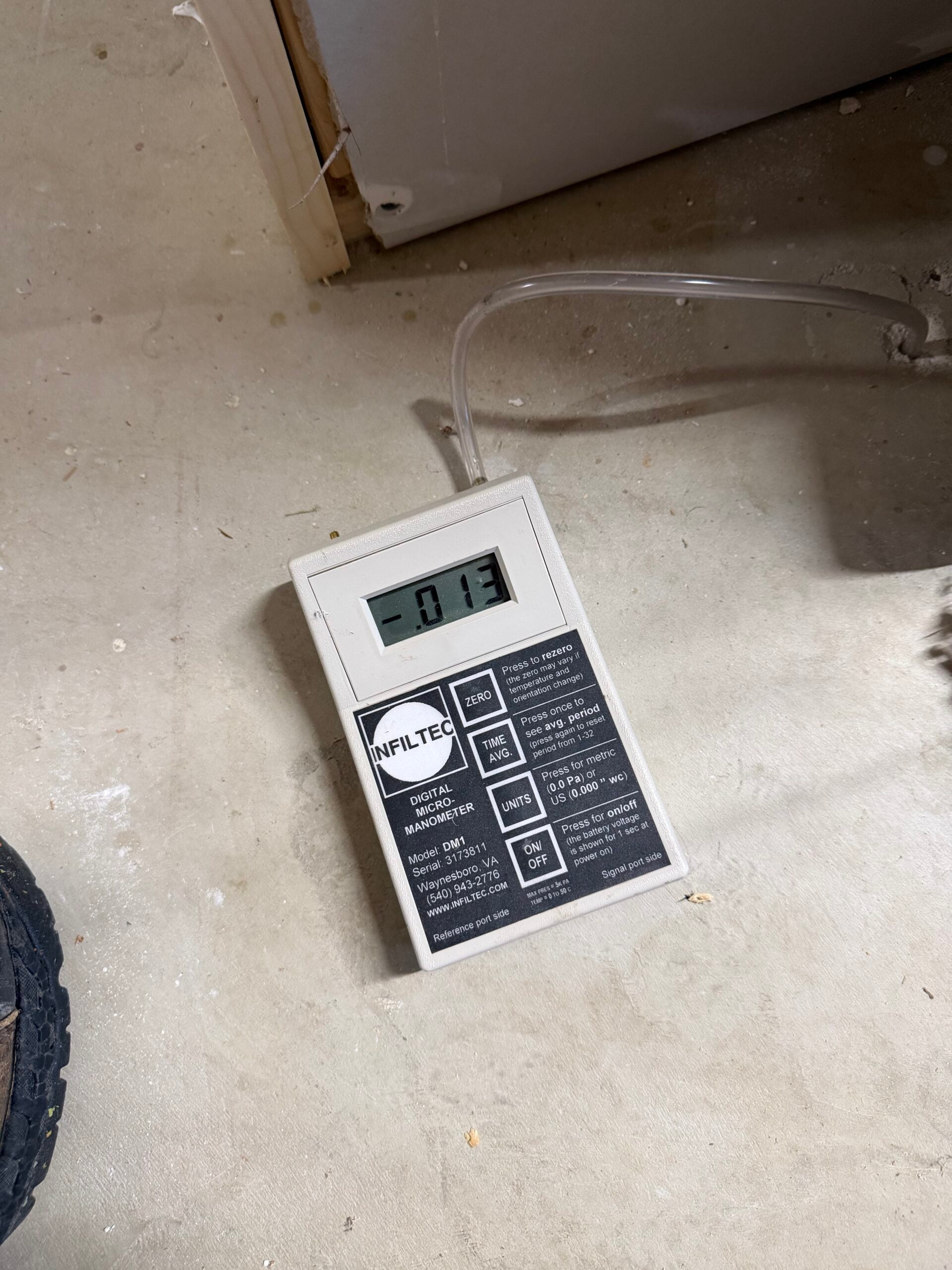
We perform Pressure Field Extension (PFE) testing to determine exactly how far the "vacuum" reaches under your slab. This allow us to select the right fan size—neither underpowered nor wastefully oversized.
System Performance Monitoring
Every system is equipped with a visible U-tube manometer. This gauge allows you to verify at a glance that the fan is creating the necessary pressure to keep the radon out.
Exhaust Discharge Safety
The 2023 standard mandates precise distances for the exhaust point (above the roofline and away from windows). This prevents radon from being re-entrained into your or your neighbor's home.
Anatomy of a Professional Mitigation System
A residential system is only as good as its weakest link. We use premium, UV-resistant Schedule 40 PVC and industry-leading fans to ensure longevity and quiet operation. A standard Rn86 Solutions installation includes high-grade materials that withstand the humidity and temperature swings of the Tennessee climate. Every component of your Residential Radon Mitigation system is installed to meet or exceed building codes:
- High-Efficiency Radon Fan: Selected based on your home's unique soil porosity and slab size.
- Suction Pit: A specifically excavated void beneath the slab to maximize air draw across the footprint.
- Hermetic Sealing: We seal all visible slab cracks and sump pump pits using high-grade elastomeric sealants.
- System Labeling: Clearly marked pipes and a dedicated breaker label for safety and future maintenance.
- System Alarm: An audible or visual notification device to alert you immediately if the fan stops functioning.
Radon Mitigation in Real Estate Transactions
In the Oak Ridge and Knoxville markets, a high radon reading is one of the most common hurdles in a home sale. If you are a seller, installing a Residential Radon Mitigation system can preserve your home's equity and ensure a smooth closing. If you are a buyer, insist on a system installed by an NRPP-certified professional who follows SGM-SF-2023 guidelines. DIY or "handyman" systems often fail to meet code and may be rejected by home inspectors or relocation companies. In many cases, a properly mitigated home is more attractive to buyers because the risk has already been professionally addressed.
The EPA recommends that you "consider" fixing your home if levels are between 2.0 and 4.0 pCi/L, and must fix the home if levels are 4.0 pCi/L or higher. Because there is no known "safe" level of radon exposure, our goal is always to reduce levels to as low as reasonably achievable.
Mitigation FAQ: What Homeowners Should Know
Q: How long does a radon fan last?
A: Most high-quality radon fans have a manufacturer’s warranty of five (5) to seven (7) years, but typically last 10 to 15 years. They are designed for continuous operation and should never be turned off, as radon entry begins as soon as the pressure differential is lost. A fan that runs 24/7 also helps prevent bearing wear from frequent starts and stops.
Q: Does the system require a lot of maintenance?
A: Very little. Homeowners should check the U-tube manometer once a month to ensure the liquid levels are offset. The EPA also recommends re-testing the air every two years to ensure the system is still performing at peak efficiency as soil conditions shift over time or as foundation settling occurs.
Q: Will a mitigation system make my house loud?
A: When installed correctly using vibration-dampening couplers, modern systems are very quiet. Most homeowners describe the sound as a faint hum, similar to a refrigerator, and it is usually only audible near the fan location. We take extra care to place fans in locations that minimize noise transfer to bedrooms or living areas.
Why Choose Rn86 Solutions?
Certified Expertise
We are NRPP-certified mitigation professionals, the highest credential in the radon industry, ensuring your system meets federal standards.
Post-Mitigation Testing
We don't just install a system and leave. Every project includes a post-mitigation test to verify that your radon levels have successfully dropped.
Local Knowledge
We understand East Tennessee's complex limestone and shale geology, which requires specific suction techniques to overcome dense soil.
Lower Your Radon Levels Today
Don't let high radon levels compromise your health. Contact Rn86 Solutions for a professional evaluation and a custom-engineered Residential Radon Mitigation system.
Lee Ruble
Matt Scheffler